Wall-Mounted Split AC in Kenya: The Complete 2026 Buying, Installation & Maintenance Guide
Wall-Mounted Split AC in Kenya (2026) | Brands, Sizing, Prices & Installation The complete 2026 guide to wall-mounted split air conditioners in Kenya. Compare Midea, Gree, MDV, Bosch, Hisense, LG & Daikin, size your unit by BTU, understand installation costs, and book expert HVAC installation from Spinel Dynamics across Nairobi, Mombasa & Kisumu.
Across Nairobi’s high-rise apartments in Kilimani, beachfront homes in Nyali, modern offices in Westlands, and clinics in Eldoret, one cooling solution dominates Kenyan interiors: the wall-mounted split air conditioner. It is quiet, energy-efficient, sleek, and powerful enough to transform any room from uncomfortable to refreshingly cool within minutes.
Kenya’s climate is changing. Average temperatures continue to rise, urban heat-island effects are intensifying, and humidity remains high in coastal and lakeside regions. As a result, what used to be a luxury reserved for offices and hotels has become a near-essential investment for homes and businesses across the country.
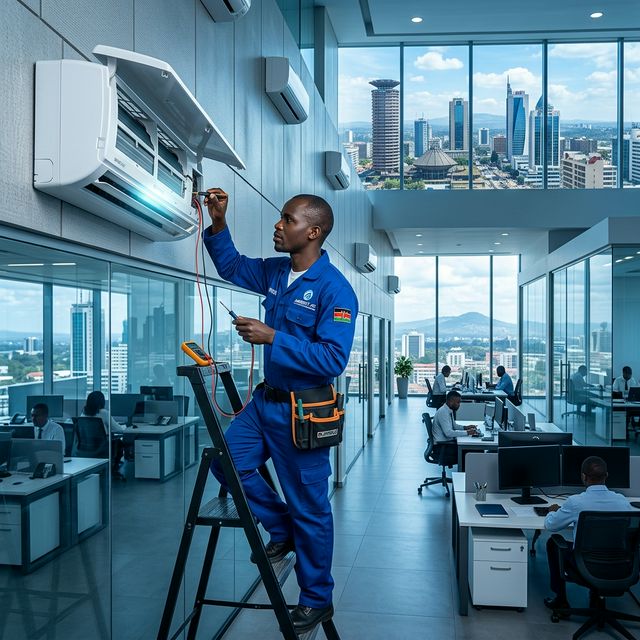
At Spinel Dynamics Group, Kenya’s leading HVAC company, we design, supply, install, and service wall-mounted split AC systems for clients across Nairobi, Mombasa, Kisumu, Nakuru, Eldoret, and the wider East African region. This complete 2026 guide walks you through everything you need to know: what wall-mounted split ACs are, how they work, the best brands available, key features to look for, and how to choose the right unit for your space.
What Is a Wall-Mounted Split Air Conditioner?
Definition and Basic Components
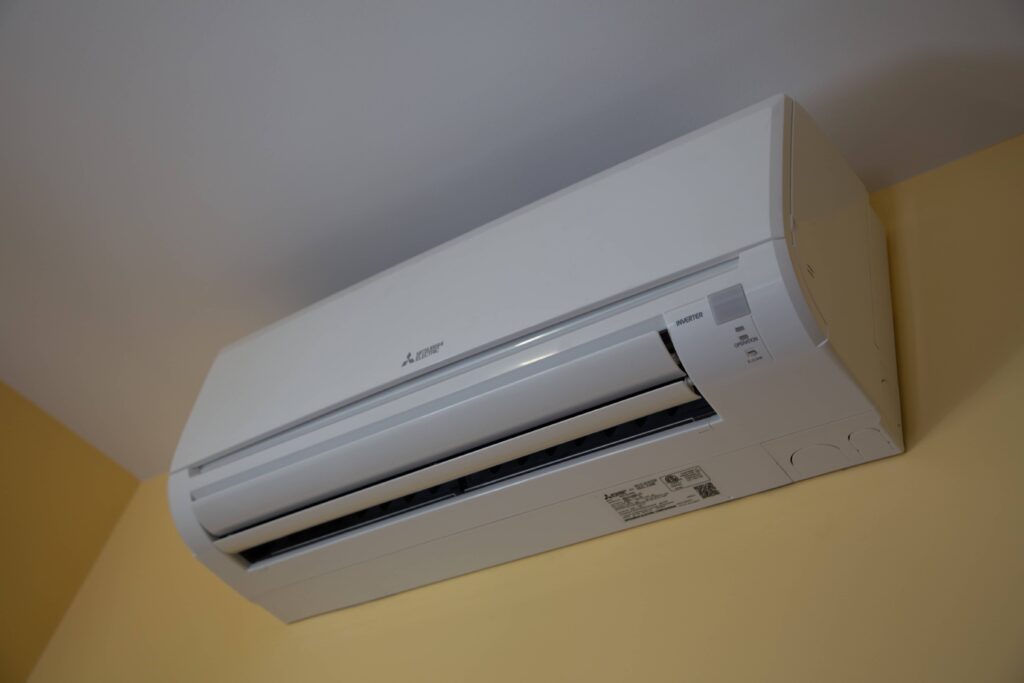
A wall-mounted split air conditioner is a two-piece climate control system. One unit (the indoor unit) is mounted on an interior wall. The other (the outdoor unit) is installed outside the building. Together, they are connected by refrigerant copper pipes, an electrical cable, and a condensate drain line.
The indoor unit contains the evaporator coil, blower fan, air filters, and controls. The outdoor unit houses the compressor, condenser coil, and condenser fan, which are the noisy components. Because the noisiest parts sit outside, indoor units run remarkably quietly. This makes them perfect for bedrooms, executive offices, boardrooms, hospitals, and any space where noise matters.
How Split ACs Differ From Other AC Types
Unlike window units, portable ACs, or central air systems, wall-mounted splits offer the best balance of efficiency, aesthetics, quiet operation, and cost. They cool single rooms or zones precisely without the energy losses of ducted systems, and they install neatly with minimal structural impact on the building.
Why Wall-Mounted Split ACs Dominate the Kenyan Market
Several factors explain why wall-mounted splits have become the default cooling choice across Kenya.
Energy Efficiency
Modern inverter split ACs are dramatically more efficient than older fixed-speed systems. Inverter models can cut electricity consumption by 30–50% compared to traditional units. Given Kenya’s high electricity tariffs, this saving alone often justifies the slightly higher upfront cost within 18–24 months.
Quiet Operation
The split design isolates noise outside the living space. Indoor units typically operate at 19–35 dB on low fan speeds, quieter than a whisper. They don’t disturb sleep, conversation, or concentration.
Sleek Aesthetics
Wall-mounted indoor units have become genuinely attractive design objects. Brands like Midea, MDV, Gree, and Bosch offer slim profiles, minimalist white or champagne finishes, and integrated lighting that enhance rather than spoil modern interiors.
Versatility and Scalability
A single split AC cools one room. However, the same outdoor unit (in multi-split configurations) can cool multiple rooms at once. You can start small and expand as needs grow.
Health Benefits
Modern split ACs do more than cool air. They filter dust, pollen, smoke, and microbes through multi-layer filtration systems, and dehumidification reduces mould risk and improves comfort during humid seasons. These features matter especially in dusty Nairobi, humid Mombasa, and pollen-rich agricultural towns.
Disadvantages of Wall-Mounted Split ACs (and How to Manage Them)
No cooling system is perfect, and it’s worth understanding the trade-offs before you buy. The main disadvantages of a wall-mounted split air conditioner are manageable with good planning:
- One unit cools one zone. A single wall split is designed to cool a single room or open area. Cooling a whole house means either multiple units or a multi-split/VRF system, which raises the cost.
- The indoor unit is visible. Unlike concealed ducted or cassette systems, the indoor unit sits on the wall in plain view. Modern slim designs minimise this, but it remains a consideration for some interiors.
- Professional installation is essential. Wall splits cannot simply be plugged in. They require refrigerant handling, copper piping, and electrical work by a licensed technician, which is a cost and scheduling factor (and a legal requirement in Kenya).
- You need outdoor space. The outdoor unit must sit on an external wall or surface with proper airflow and shade, which can be a constraint in dense apartments.
- Maintenance is ongoing. Filters need regular cleaning and the system needs periodic professional servicing to keep efficiency high.
For most Kenyan homes and offices, these trade-offs are minor compared with the efficiency, quiet operation, and comfort a properly sized split delivers. A portable AC avoids installation but is noisier, less efficient, and far less effective, which is why wall splits remain the preferred choice.
Top Wall-Mounted Split AC Brands in Kenya
The Kenyan market features dozens of AC brands. However, four stand out for the combination of quality, value, technology, and availability that matters most to buyers in 2026.
Midea: The Energy-Efficient Volume Leader
Why Midea leads in Kenya. Midea is one of the world’s largest air conditioner manufacturers, with a strong distribution and service network across Kenya. Its wall-mounted split ACs are widely regarded as the best value-for-money option in the country, combining genuine inverter technology, smart features, and broad availability.
Midea range. Midea offers wall-mounted splits in capacities from 9,000 BTU up to 24,000 BTU, covering everything from a small bedroom to a large open-plan living room or office. Popular models include heating-and-cooling units at 12,000 BTU and inverter heating-and-cooling units at 24,000 BTU.
Key Midea features. Midea wall splits include full DC inverter technology as standard. They also offer Wi-Fi smart control via the Midea Home app, multi-stage filtration (including ioniser, anti-bacterial, and PM2.5 filters), dehumidification mode, sleep mode, and turbo cooling. Heating-and-cooling models add heat pump functionality for cold mornings in Limuru, Nyahururu, or Nakuru.
Best Midea applications. Midea wall splits suit residential bedrooms, family rooms, executive offices, hotel rooms, clinics, and retail spaces. They are particularly strong in Kenya’s high-electricity-cost environment because their inverters consistently cut Kenya Power bills by 30–50% compared to non-inverter alternatives.
Gree: The Rugged Performer for Demanding Climates
Why Gree stands out. Gree is a globally trusted brand known for durability and high cooling output, especially in warmer climates. Their systems are rugged, low-maintenance, and engineered for the heat, humidity, and dust of Kenyan conditions. Gree wall splits perform reliably in coastal Mombasa, hot Garissa, and arid northern Kenya where weaker brands struggle.
Gree range. Gree offers wall-mounted splits from 9,000 BTU to 48,000 BTU, with both inverter and non-inverter options available.
Key Gree features. Gree wall splits include strong copper construction, anti-corrosion coatings (critical for coastal installations), powerful airflow rates, and self-cleaning evaporator coils. Their inverter models offer Cold Plasma air purification, intelligent defrost, and silent night operation.
Best Gree applications. Gree suits retail stores, schools, apartments, industrial offices, hotels, and any application where reliability and cooling power matter more than smart-home gimmicks. The brand is exceptional for coastal Kenya, where salt-laden air destroys cheaper units within a few seasons.
MDV: The Commercial-Grade Solution from the Midea Group
What MDV brings to the market. MDV is the professional and commercial division of the Midea Group. While Midea focuses on residential and light commercial, MDV is engineered for larger-scale applications, multi-zone installations, and integration with Building Management Systems (BMS). For Kenyan businesses building serious cooling infrastructure, MDV is the go-to brand.
MDV range. MDV wall-mounted splits cover capacities from 18,000 BTU up to 60,000 BTU. They are available as standalone units or as part of larger MDV VRF/VRV multi-split systems.
Key MDV features. MDV wall splits include premium full DC inverter compressors, advanced multi-zone integration, BMS compatibility, low-temperature operation (down to -15°C outdoor temperature for heating), commercial-grade filtration, and extended duty cycles for 24/7 operation. They also include longer warranty coverage suitable for commercial buyers.
Best MDV applications. MDV is the right choice for shopping malls, banks, hospitals, government offices, hotels, multi-floor buildings, and any installation where downtime isn’t acceptable. Spinel Dynamics specifies MDV systems for major commercial projects across Kenya, often as part of integrated VRF/VRV solutions.
Bosch: German Precision Engineering at the Premium Level
Why Bosch commands a premium. Bosch brings German engineering, build quality, and design refinement to the Kenyan AC market. Positioned firmly in the premium category, Bosch wall-mounted splits are the choice for buyers who prioritise quality, aesthetics, durability, and advanced automation. The Bosch Climate Line range features compact, modern designs with whisper-quiet operation.
Bosch range. Bosch wall-mounted heat pump air conditioners cover capacities from 9,000 BTU to 24,000 BTU, with popular options around 22,000 BTU and premium models offering higher capacities and advanced features.
Key Bosch features. Bosch wall splits include inverter-driven compressors for maximum efficiency, ultra-low noise levels, premium build quality (heavier and more solidly constructed than competitors), advanced filtration with anti-allergen coatings, heat pump operation suitable for cold seasons, smart home integration, and refined aesthetics that complement luxury interiors.
Best Bosch applications. Bosch suits executive offices, luxury homes in Karen, Runda, and Muthaiga, hospitality suites in premium hotels, boardrooms, and any space where build quality and quiet operation justify the higher investment. Bosch is often specified by interior designers and architects working on high-end projects across Kenya.
Other Wall-Mounted Split AC Brands Available in Kenya
Beyond our four featured brands, several other names are widely available in the Kenyan market, and you’ll see them whenever you search for a split air conditioner in Kenya:
- Hisense is a strong mid-range choice, well known for energy-efficient inverter models with smart Wi-Fi control, popular in 12,000 and 18,000 BTU sizes for homes and small offices.
- LG is sought after for its Dual Inverter energy-saving technology, ioniser filtration, and Smart Diagnosis features across its DUALCOOL and ARTCOOL ranges.
- Daikin and Carrier are premium, globally respected brands suited to demanding residential and commercial installations, and Spinel Dynamics is an authorised dealer for both.
- Von, Armco, Solstar, and Premier offer budget-friendly, cooling-only and entry-level inverter units for buyers who need reliable, straightforward cooling at the lowest entry point.
We supply and install across all of these brands, so our recommendation always starts with your space, climate, and usage rather than a single manufacturer.
How to Choose the Right Wall-Mounted Split AC
Selecting the right unit means balancing cooling capacity, energy efficiency, features, brand, and your space. Here’s what to consider.
Calculate the Correct BTU Capacity
BTU (British Thermal Units) measures cooling capacity, and choosing the right BTU rating is the single most important specification. As a general guide:
- 9,000 BTU suits small rooms up to 12 m² (small bedroom, study, small office).
- 12,000 BTU handles rooms of 15–20 m², perfect for a typical master bedroom in Kilimani, Westlands, or Lavington.
- 18,000 BTU cools rooms of 25–35 m², such as larger living rooms or medium-sized offices.
- 24,000 BTU serves spaces of 35–50 m².
- 30,000–60,000 BTU units cover open-plan areas, conference rooms, and large commercial spaces.
However, BTU calculations should also factor in ceiling height, window size and direction, sun exposure, occupancy, equipment heat load, and insulation quality. Spinel Dynamics conducts proper heat-load calculations to ensure your unit is correctly sized.
Inverter vs Non-Inverter
Inverter ACs continuously adjust compressor speed to match cooling demand, whereas non-inverter ACs cycle fully on and off. The differences are dramatic.
Inverter units save 30–50% on electricity over their lifespan. They also maintain a more stable room temperature, operate more quietly, and last longer because they avoid the wear of constant on/off cycling. While non-inverter units cost less upfront, inverter models from Midea, MDV, Gree, and Bosch pay back the difference within 18–36 months through electricity savings.
For Kenyan buyers, inverter technology is essential, not optional. All serious installations from Spinel Dynamics use inverter models.
Heating Capability
Many Kenyan towns get genuinely cold during the long rains and cold seasons. Locations like Limuru, Nyandarua, Nakuru, Nyahururu, Eldoret, Kericho, and parts of Nairobi regularly drop below 12°C. Heat-pump models, which both cool and heat using the same equipment, add significant year-round value. Most Midea, MDV, and Bosch inverter splits include heating mode as standard, but always confirm before purchase.
Energy Efficiency Ratings
Look for high SEER (Seasonal Energy Efficiency Ratio) or EER values. Higher numbers mean better efficiency. Premium brands publish these ratings prominently, and energy labels (where available) help you compare options.
Filtration, Air Quality, and Allergies
Given Nairobi’s dust and pollution levels, multi-layer filtration is critical. Look for PM2.5 filters, anti-bacterial coatings, ioniser functions, and active carbon layers. For allergy sufferers, the best air conditioner is one with genuine multi-stage filtration plus a dehumidification mode: the filters trap pollen, dust, pet dander, and airborne particles, while dehumidification discourages the dust mites and mould that trigger many allergic reactions. Families with asthma, allergies, or young children benefit enormously from this combination, which is a key Midea and Bosch strength. Whichever brand you choose, clean or replace the filters on schedule, because a dirty filter recirculates the very allergens you’re trying to remove.
Noise Levels
Quieter units are better, especially in bedrooms. Indoor unit noise levels below 25 dB on low speed are excellent, while anything above 40 dB will disturb light sleepers. Premium brands like Bosch typically operate at the quietest end of the range.
Smart Features and Wi-Fi Control
Modern split ACs offer smartphone control via dedicated apps, voice control via Alexa or Google Home, scheduling, geofencing, and remote diagnostics. While not essential, these features add genuine convenience and energy savings. Midea, MDV, and Bosch all offer strong smart-home integration.
Warranty and Aftercare
A 1-year warranty is standard, but premium brands and reputable installers offer 2–5 year compressor warranties and parts coverage. Always confirm what is covered and for how long. Importantly, warranty validity often depends on professional installation by certified technicians.
Wall-Mounted Split AC Installation: What to Expect
A correctly installed split AC delivers years of efficient service. A badly installed one wastes electricity, fails warranties, and breaks down prematurely. Here’s what a proper installation involves.
Step 1: Site Survey
Our technicians visit your property to assess room size, orientation, sun exposure, occupancy, electrical capacity, and structural constraints. We identify the best locations for the indoor and outdoor units, plan the pipe route, and confirm electrical requirements.
Step 2: Unit Selection and Sizing
Based on the survey, we recommend the right BTU capacity, brand, and model for your space. We don’t oversell: undersizing wastes money in the short term, but oversizing wastes money for the entire life of the unit through inefficient cycling.
Step 3: Mounting the Indoor Unit
The indoor unit mounts on a heavy-duty bracket, typically 2.1–2.4 metres above floor level, with at least 15 cm clearance from the ceiling. We ensure the unit is perfectly level so condensate drains properly.
Step 4: Outdoor Unit Placement
The outdoor unit sits on a vibration-isolating bracket or pad, ideally on a shaded north or east-facing wall (to avoid direct afternoon sun) with adequate airflow clearance. We secure it firmly to withstand Nairobi’s wind and weather.
Step 5: Copper Piping and Electrical
We run insulated copper refrigerant pipes (suction and liquid lines) between the indoor and outdoor units, then install the electrical cable, condensate drain, and any required electrical isolator. All piping is properly insulated and protected with trunking for a clean finish and longevity.
Step 6: Vacuum, Charge, and Commission
Before energising the system, we vacuum the refrigerant lines to remove air and moisture. We then release the pre-charged refrigerant from the outdoor unit, energise the system, and run it through full cooling and heating cycles to verify performance.
Step 7: User Training and Handover
Finally, we walk you through using the remote, smart-home setup, basic maintenance, and what to watch for. We also provide warranty documentation and a service schedule.
How Much Does a Wall-Mounted Split AC Cost in Kenya?
A common question is how much a wall-mounted air conditioner costs once installed. Rather than a single figure, it helps to think in tiers, because the final cost depends on the unit and the installation separately.
The unit itself falls into roughly three bands. Entry-level cooling-only and basic units (typically 9,000–12,000 BTU from budget brands) sit at the affordable end. Mid-range inverter units from brands like Midea, Gree, Hisense, and LG occupy the middle, which is the sweet spot for most Kenyan homes. Premium and commercial-grade units from Bosch, MDV, Daikin, and Carrier sit at the top, where build quality, capacity, and advanced features justify the investment.
Installation is a separate cost from the unit. A standard installation fee covers a short copper-pipe run (usually up to about 3 metres). Longer pipe runs, structural work, electrical upgrades, or multiple units increase the cost. Because no two sites are identical, the only accurate way to know your total is a site survey and a written quotation.
What drives the price up or down? Cooling capacity (BTU), inverter versus non-inverter technology, brand tier, heat-pump (heating) capability, smart features, coastal/anti-corrosion treatment, and the complexity of the installation. Spinel Dynamics provides a transparent, itemised quotation after a free site assessment, so you see exactly what you’re paying for.
Maintenance: Protecting Your Wall Split AC Investment
A wall-mounted split AC is a long-term investment. With proper maintenance, it should deliver 10–15+ years of reliable service. Without maintenance, the same unit may struggle within 3–5 years.
Monthly Owner Maintenance
The single most important task is cleaning the air filters every 2–4 weeks. Pull them out, wash gently with mild soap and water, dry thoroughly, and replace. Also wipe down the indoor unit body and check that nothing is blocking airflow.
Six-Monthly Professional Service
Every six months, professional servicing should include deep evaporator coil cleaning, condenser coil cleaning (outdoor unit), drain line flushing, refrigerant pressure check, electrical connection inspection, fan motor lubrication, and overall system performance testing. The outdoor condenser collects dust and debris that significantly cuts efficiency if not cleaned.
Annual Comprehensive Service
A full annual service adds compressor performance testing, control board diagnostics, refrigerant top-up if needed, and replacement of worn components. Spinel Dynamics offers maintenance contracts that include all of the above plus priority response for emergencies.
Common Maintenance Mistakes
Many owners skip filter cleaning until performance drops dramatically. By then, the evaporator coil is fouled, the system runs continuously, and electricity bills spike. Likewise, ignoring strange noises, ice on pipes, water dripping, or weak airflow leads to expensive failures. Catch issues early.
Common Wall-Mounted Split AC Mistakes to Avoid
Over years of installing and rescuing split ACs across Kenya, we see the same expensive mistakes repeatedly.
Choosing the Cheapest Unit
Bargain-basement ACs from unknown brands often lack proper inverter technology, use poor-quality compressors, and have no local spares support. As a result, they fail within 2–3 years and cost more in replacements than a quality unit would have initially.
Undersizing or Oversizing
Buying a 9,000 BTU unit for a 30 m² living room means it runs continuously and never reaches the set temperature. Conversely, installing a 24,000 BTU unit in a 15 m² bedroom causes short cycling, poor dehumidification, and wasted energy. Proper sizing matters.
Poor Installation
Cheap installers cut corners on copper piping length, vacuum procedures, drainage slope, and electrical work. Performance suffers, units leak refrigerant, condensate drips inside walls, and warranties are voided.
Skipping Filter Cleaning
A blocked filter forces the AC to work much harder, increasing electricity consumption and stressing the compressor. This is the single most common cause of premature AC failure in Kenya.
Placing the Outdoor Unit in Direct Sun
An outdoor unit baking in the afternoon sun works far harder than one in shade. Placement matters enormously for efficiency and longevity.
Ignoring Coastal Corrosion
In Mombasa, Diani, Kilifi, and Malindi, salt-laden air corrodes standard AC coils within a few years. Always specify coastal/anti-corrosion treated units in these locations.
Not Servicing Regularly
ACs are mechanical equipment. Without servicing, performance degrades, refrigerant escapes, electrical contacts corrode, and compressors fail. A small annual investment in servicing protects a much larger investment in the equipment.
Frequently Asked Questions
Is a wall-mounted AC good?
Yes. For cooling a single room or open-plan zone, a wall-mounted split is one of the best options available in Kenya. It combines quiet operation, energy efficiency (especially in inverter models), sleek looks, and effective filtration, which is why it’s the default choice for bedrooms, offices, clinics, and retail spaces.
What is the disadvantage of a wall-mounted air conditioner?
The main drawbacks are that each unit cools only one zone, the indoor unit is visible on the wall, it requires professional installation rather than plug-and-play setup, you need suitable outdoor space for the condenser, and it needs regular filter cleaning and servicing. For most homes and offices these are minor compared with the comfort and efficiency gains.
Which AC is better for allergies?
Choose a unit with strong multi-stage filtration, such as PM2.5 and anti-bacterial filters plus an ioniser, combined with a dehumidification mode. The filtration captures pollen, dust, and dander while dehumidification limits mould and dust mites. Midea and Bosch models are particularly good here. Just remember to keep the filters clean, or they recirculate allergens.
How much is a wall-mounted air conditioner installed?
The total depends on two separate things: the unit (entry-level, mid-range inverter, or premium/commercial) and the installation (a standard short pipe run versus extended piping, electrical upgrades, or multiple units). Because every site is different, the accurate figure comes from a site survey and a written quotation. Spinel Dynamics offers a free assessment and a transparent, itemised quote.
Which AC brand is best for my home in Kenya?
For most Kenyan homes, Midea offers the best balance of features, energy efficiency, and reliability. For premium homes prioritising quality and aesthetics, choose Bosch. For tough conditions or coastal locations, Gree performs exceptionally well.
How much electricity does a wall-mounted split AC use?
A 12,000 BTU inverter unit running 8 hours daily typically consumes 1.5–3 kWh per day, depending on settings, ambient temperature, and efficiency.
Do split ACs work during power outages?
No. All ACs require electricity. However, you can run wall splits on inverter battery systems, solar power, or generators sized appropriately for the unit’s startup and running load.
How long does AC installation take?
A standard single wall-mounted split AC installation takes 2–4 hours. Complex installations with long pipe runs, electrical upgrades, or multiple units may take a full day.
Can I install the AC myself?
This is strongly not recommended. Improper installation voids manufacturer warranties, can damage the unit, and may create safety hazards. Refrigerant handling also legally requires licensed technicians in Kenya.
How often should I service my split AC?
For residential use, every six months. For commercial use or heavily-used units, every three months. Clean the filters monthly yourself.
What is the lifespan of a wall-mounted split AC?
With proper maintenance, quality inverter units from Midea, MDV, Gree, and Bosch last 10–15 years or more. Cheap unbranded units often fail within 3–5 years.
Why Choose Spinel Dynamics for Your Wall-Mounted Split AC?
Authorised Brand Partners
Spinel Dynamics Group is Kenya’s leading HVAC company and an authorised dealer for premium global brands including Daikin, Carrier, Samsung, LG, Toshiba, Midea, and Panasonic. We also source genuine Gree, MDV, and Bosch units through certified channels, protecting your warranty and ensuring authenticity.
Engineering-Led Approach
We don’t just sell ACs; we engineer cooling solutions. Our team conducts proper heat-load calculations, recommends the right capacity, plans pipe routing and electrical work, and installs to manufacturer specifications. As a result, your AC performs at its rated capacity from day one.
Full Turnkey Service
From site survey through specification, supply, installation, commissioning, and ongoing maintenance, we handle everything under one roof. You deal with one accountable team rather than juggling multiple vendors.
Nationwide Coverage
We serve clients across Nairobi, Mombasa, Kisumu, Nakuru, Eldoret, Naivasha, Nyeri, Thika, Machakos, and beyond. We also deploy projects to Uganda, Tanzania, and Rwanda on request.
Integrated HVAC Capability
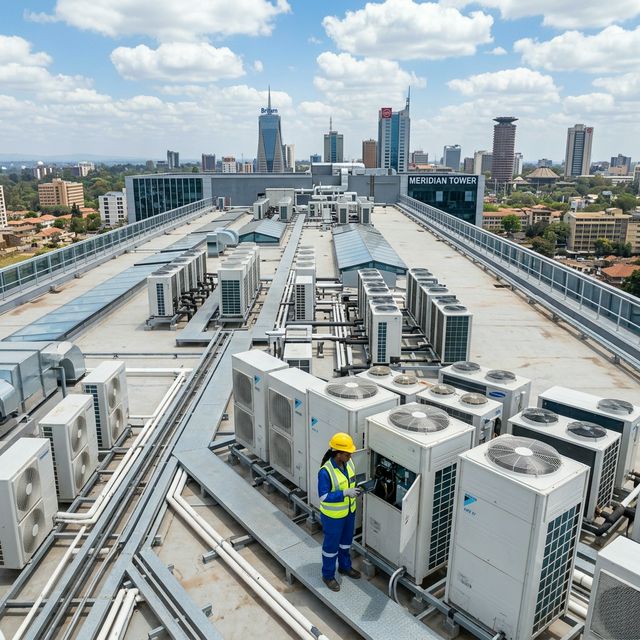
Beyond wall splits, we deliver cassette ACs, ducted systems, VRF/VRV systems, cold rooms, mechanical ventilation, kitchen hoods, and extractor fans. When your cooling needs grow, your existing partner already understands your building.
Where to Buy and Install a Wall-Mounted Split AC in Nairobi
If you’re searching for where to buy an air conditioner in Nairobi, the smarter question is where to buy and install one correctly, because a wall split is only as good as its installation. Buying a unit online or off the shelf still leaves you needing a licensed technician for the refrigerant work, piping, and commissioning. Spinel Dynamics handles both: we supply genuine units across all major brands and install them to manufacturer specification, so your warranty stays valid and the system performs at its rated capacity from day one.
Ready to Install Your Wall-Mounted Split AC?
Whether you’re cooling a single bedroom in Kileleshwa, fitting out a new office in Upper Hill, building a hotel in Diani, or rolling out climate control across a multi-branch retail chain, the right wall-mounted split AC transforms comfort, productivity, and energy costs.
Talk to Spinel Dynamics Group for a site visit, an engineered proposal, and a transparent quotation tailored to your space.
Spinel Dynamics Group Aqua Plaza, First Floor, Murang’a Road, Nairobi Phone: +254 714 821 020 Email: info@spineldynamics.com Mon–Fri: 8:00 AM – 6:00 PM | Sat: 9:00 AM – 2:00 PM
Quick Links: Home · About Us · Services · Products · Blog · Contact Us
Our Services: Air Conditioning · Mechanical Ventilation · Cold Rooms · Split Aircons · VRF/VRV Systems · Extractor Fans