Walk-In Cold Room in Kenya: The Complete 2026 Guide to Design, Installation & Maintenance
Walk-In Cold Room in Kenya (2026) | Design, Installation & Cost Guide The complete 2026 guide to walk-in cold rooms in Kenya. Compare chillers, freezers, modular and solar cold rooms, learn how to size and install one, and get expert turnkey cold room design from Spinel Dynamics across Nairobi, Mombasa, Kisumu & beyond.
Across Kenya’s farms, butcheries, dairies, supermarkets, restaurants, hotels, hospitals, and pharmaceutical warehouses, one piece of equipment quietly protects billions of shillings worth of stock every single day: the walk-in cold room. Without it, fresh produce wilts within hours, meat and fish spoil before reaching market, vaccines lose potency, dairy turns sour, and entire supply chains collapse.
A walk-in cold room is not a luxury. It is the backbone of any business handling perishables in Kenya’s warm tropical climate.
At Spinel Dynamics Group, Kenya’s leading HVAC and commercial refrigeration specialists, we design, build, and maintain walk-in cold rooms for clients across every sector. Our footprint covers Nairobi, Mombasa, Kisumu, Nakuru, Eldoret, and the wider East African region. This complete 2026 guide walks you through everything you need to know: what walk-in cold rooms are, how they work, the types available, key technical specifications, what drives the cost, and how to choose the right partner for your project.
What Is a Walk-In Cold Room?
Definition and Purpose
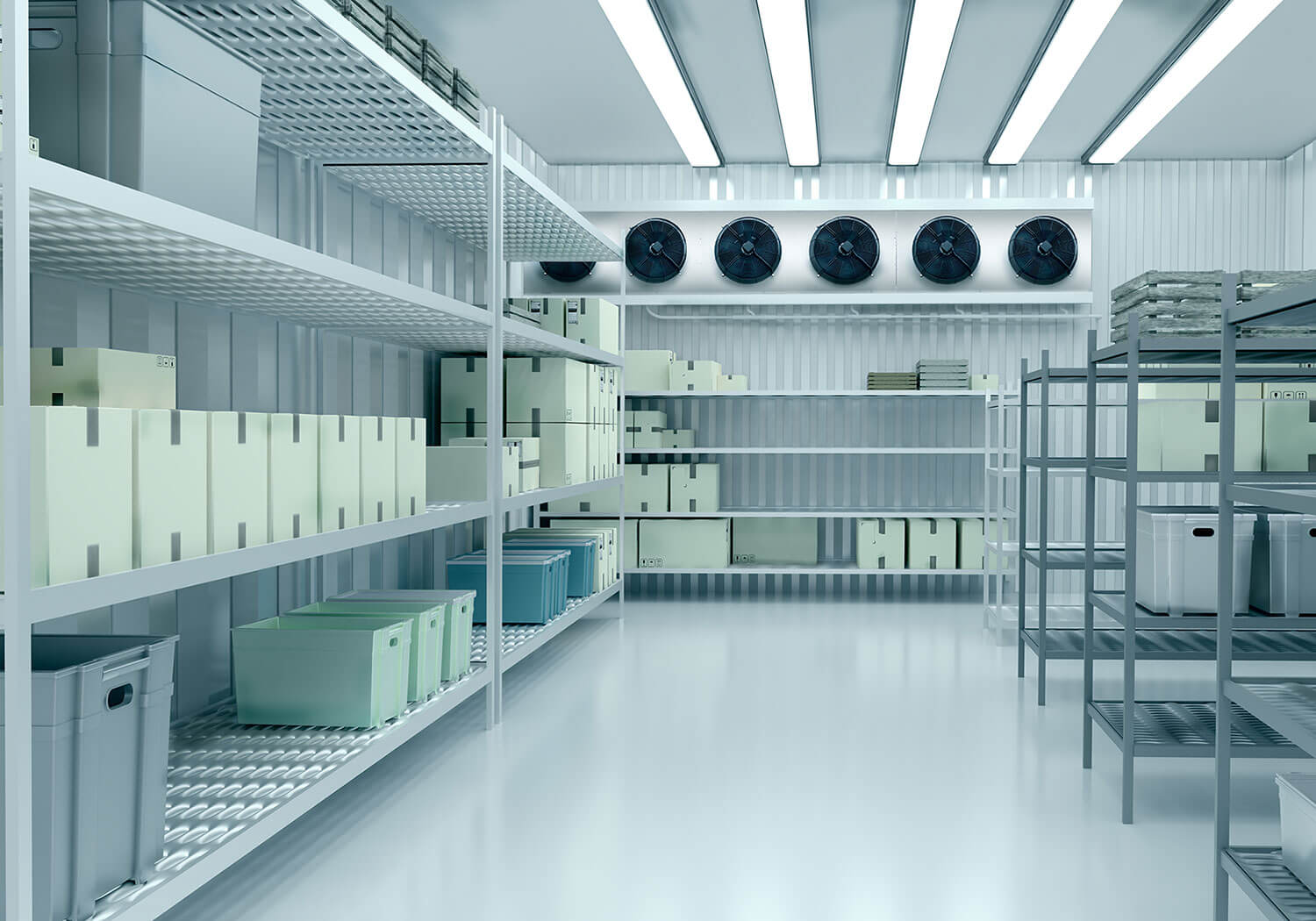
A walk-in cold room is a refrigerated enclosure large enough for a person to walk inside. It is constructed from insulated panels and cooled by a dedicated refrigeration system. Unlike a domestic fridge or chest freezer, a walk-in cold room is purpose-built for commercial volumes, offering superior temperature stability, precise humidity control, and the storage capacity to support real business operations.
Where Walk-In Cold Rooms Are Used
Walk-in cold rooms come in two broad temperature categories. Chillers operate at positive temperatures (typically +2°C to +10°C) for fresh produce, beverages, dairy, flowers, and short-term meat storage. Freezers operate at negative temperatures (typically -5°C to -40°C) for long-term storage of meat, fish, ice cream, and frozen goods.
Every supermarket chain in Kenya — including Naivas, Carrefour, Quickmart, Chandarana, Cleanshelf, and independent retailers — relies on cold rooms to maintain their cold chain. Hotels, restaurants, butcheries, dairy processors, horticultural exporters, fish handlers, pharmaceutical distributors, and hospitals all depend on properly designed cold storage to operate.
Why Your Business Needs a Walk-In Cold Room
Protecting Stock and Reducing Waste
Without proper cold storage, perishables in Kenya’s climate spoil rapidly. Post-harvest losses for fruit, vegetables, dairy, and meat in East Africa routinely exceed 30%. A properly specified cold room can reduce this loss to under 5%, paying for itself within months on stock preservation alone.
Extending Product Shelf Life
Cold storage dramatically extends the usable life of perishables. Fresh meat that lasts 1–2 days at room temperature can last 7–10 days in a chiller and several months in a freezer. Leafy vegetables triple their shelf life, and dairy products remain safe for weeks rather than hours.
Meeting Regulatory and Export Standards
Many Kenyan industries are legally required to maintain cold chain integrity. The Kenya Dairy Board, Kenya Bureau of Standards (KEBS), Pharmacy and Poisons Board, and Public Health Department all enforce temperature requirements. Export markets demand HACCP compliance, and proper cold storage forms the foundation of any HACCP-certified operation.
Enabling Business Growth
A cold room transforms what a business can sell. Butcheries can buy whole carcasses at wholesale prices and process them gradually. Restaurants can purchase produce in bulk during peak season. Exporters can consolidate shipments to meet container loads. In short, cold storage unlocks economies of scale that simply aren’t possible without it.
Types of Walk-In Cold Rooms
The Kenyan market offers several distinct types of walk-in cold rooms, each suited to different applications.
Walk-In Chillers (Positive Temperature Cold Rooms)
Walk-in chillers maintain temperatures typically between +2°C and +10°C and are the most common cold room type in Kenya. Applications include fresh produce storage, dairy distribution, beverage cooling, flower preservation, butchery short-term storage, and supermarket back-of-house refrigeration. They consume less energy than freezers because the temperature differential from ambient air is smaller.
Walk-In Freezers (Negative Temperature Cold Rooms)
Walk-in freezers operate between -5°C and -40°C. They are essential for meat processors, fish handlers, ice cream distributors, and any business requiring long-term frozen storage. Freezers require thicker insulation, more powerful compressors, and specialised flooring to handle extreme cold and prevent ground frost heave.
Combined Chiller-Freezer Rooms
Many businesses install dual-temperature setups. These feature a chiller compartment and a freezer compartment separated by an insulated partition, often sharing a common antechamber. This configuration is popular with butcheries, restaurants, and supermarkets needing both temperature zones in one footprint.
Modular Prefabricated Cold Rooms
Modular cold rooms use standardised insulated panels that connect via cam-locks, so they can be assembled, dismantled, expanded, or relocated as business needs change. They are the dominant format in Kenya because they balance speed of installation, flexibility, and competitive cost.
Custom-Built Cold Rooms
For unusual sites, irregular shapes, or specialised applications, a custom-built cold room is fabricated to exact specifications. This route suits clients with restricted door access, low ceiling heights, integration with existing buildings, or unusual capacity requirements. Spinel Dynamics specialises in custom turnkey installations that solve site-specific challenges other contractors can’t.
Solar-Powered and Off-Grid Cold Rooms
A growing innovation in Kenya, solar-powered walk-in cold rooms address the unreliability of grid power in rural areas. For example, the Baridi solar-powered walk-in cold room deployed at Burma Market in Nairobi can chill up to 1,000 kilograms of meat at once on solar energy alone. Off-grid and hybrid systems are transforming cold chain access for smallholder farmers, fishing communities, and rural traders.
Pharmaceutical and Medical Cold Rooms
Pharmaceutical cold rooms require tighter tolerances than commercial food cold rooms. They typically hold temperatures between +2°C and +8°C with deviations of less than ±1°C, and they include continuous monitoring, alarms, backup refrigeration, and validation documentation. Healthcare providers, vaccine distributors, blood banks, and clinical laboratories all rely on this category.
Walk-In Cold Room Components: How the System Works
A walk-in cold room is more than just a refrigerated box. It is an integrated system of several critical components.
Insulated Panels
The walls, ceiling, and floor are built from polyurethane (PU) injected sandwich panels. Panel thickness ranges from 80mm to 150mm depending on the temperature requirement. Chillers typically use 80–100mm panels, while freezers require 100–150mm panels to minimise heat ingress. Panel faces are usually pre-painted galvanised steel, stainless steel for hygiene-critical applications, or food-grade plastic.
Refrigeration System
The refrigeration unit consists of a condensing unit (located outside or in a separate plant room) and an evaporator (located inside the cold room). Together, they circulate refrigerant gas that absorbs heat from inside the room and releases it outside. Common refrigerants in Kenya include R404A, R134A, and increasingly R290 (propane) and R448A — more environmentally friendly options aligned with global phase-down agreements.
Doors and Door Hardware
Cold room doors are heavy insulated assemblies with magnetic gaskets that seal against air leakage. Standard options include hinged personnel doors, sliding doors for high-traffic operations, and strip curtains for frequent access. Freezer doors include heated frames to prevent ice buildup.
Flooring
For chillers, the building floor with vinyl or epoxy coating often suffices. However, freezer floors require dedicated insulation underneath to prevent frost penetration into the ground beneath. Spinel Dynamics recommends an insulated floor for any cold room with frequent traffic or operating below 0°C.
Lighting and Controls
Modern cold rooms use moisture-rated LED lighting that performs well at low temperatures. Digital control panels display interior temperature, humidity, and operating status, while higher-end systems offer remote monitoring via Wi-Fi or GSM. Backup alarms warn of temperature excursions or door-open conditions.
Backup and Redundancy
For critical applications like pharmaceuticals, dairy processing, or large-scale meat storage, dual refrigeration systems provide redundancy. If one compressor fails, the second takes over automatically, protecting against catastrophic stock loss during equipment failure.
How Much Does a Walk-In Cold Room Cost in Kenya?
One of the most common questions is how much a walk-in cold room costs. Rather than a single figure, it helps to understand the factors that determine the price, because cold rooms are engineered to order and no two installations are identical.
The biggest cost drivers are size (floor area and ceiling height), temperature range (freezers cost more than chillers due to thicker panels and bigger compressors), panel specification (thickness and core density), refrigeration capacity, controls and monitoring, finishing, and any backup or redundancy systems. As a rough hierarchy, a small chiller is the most affordable, a similarly sized freezer costs more, medium combined rooms sit higher again, and large customised turnkey rooms for distribution centres, pack-houses, and pharmaceutical warehouses are the most significant investment. Solar-hybrid systems carry a premium over equivalent grid-only systems but pay back through lower running costs and reliability in off-grid locations.
A complete quotation should include the site survey and design, insulated panels (walls, ceiling, and floor where applicable), refrigeration equipment (condenser and evaporator), doors and hardware, lighting, controls and thermostats, refrigerant gas, installation labour, commissioning, and a typical 12-month warranty. Always confirm what is and isn’t included before signing, because hidden charges for ducting, electrical work, civil preparation, or backup batteries can significantly inflate the final cost. Because every project is bespoke, the accurate figure comes from a site survey and a written quotation — Spinel Dynamics provides both.
How to Choose the Right Walk-In Cold Room
Selecting the right cold room means balancing capacity, temperature, energy efficiency, durability, and budget. Here’s what to consider.
Calculate Required Capacity
Start with your peak storage volume, then factor in product type, turnover rate, and growth projections. A common mistake is sizing for today’s volume without allowing for business growth over the next 5–10 years. Spinel Dynamics designs cold rooms with sensible expansion headroom built in.
Determine Operating Temperature
Be specific about the temperature you need. Fresh meat chillers typically operate at 0°C to +4°C. Dairy and produce chillers run at +2°C to +8°C. Blast freezers operate at -25°C to -40°C, and standard freezers hold at -18°C to -22°C. Pharmaceutical cold rooms require very tight tolerances. Each requirement drives different equipment selection.
Specify Panel Thickness Correctly
Panel thickness drives both insulation performance and ongoing energy consumption. For chillers, 80mm is the minimum standard, with 100mm preferred for warmer climates or high heat loads. For freezers, 100mm is the absolute minimum, with 120–150mm strongly recommended. Skimping on panels saves money up front but costs far more in electricity bills over the room’s life.
Plan Site Location and Access
Location matters enormously. Cold rooms should ideally sit away from direct sunlight, heat sources, and high-humidity zones. The condensing unit needs adequate ventilation and easy service access. Consider product flow: how does stock arrive, where is it staged, and how does it exit? Poor logistics design wastes labour for the life of the facility.
Choose the Right Refrigerant
Older refrigerants like R22 are being phased out globally. Modern installations use R404A, R134A, R448A, or natural refrigerants like R290 (propane) and R744 (CO₂). Each has different performance, environmental impact, and regulatory status. Reputable contractors will recommend the right refrigerant for your specific application and future-proof your investment.
Factor in Energy Costs
A cold room is a long-term energy consumer. High-efficiency compressors, EC fan motors, LED lighting, properly thickened panels, and well-designed doors can cut electricity bills by 30–50% over the room’s life. The cheapest cold room at purchase is rarely the cheapest cold room over ten years.
Plan for Backup Power
Power outages in Kenya remain a fact of business life. For critical stock, plan for backup — whether grid plus generator, grid plus solar, or grid plus battery. Even a few hours of downtime can spoil tonnes of product, so the cost of a backup system is dwarfed by the cost of one major stock loss event.
Cold Room Installation in Kenya: The Process Explained
A properly installed cold room follows a structured process. Here’s what to expect when working with Spinel Dynamics Group.
Step 1: Site Survey and Consultation
Our engineers visit your premises to understand your operation, measure available space, assess power supply, and discuss your goals. We identify constraints — door access, ceiling height, ventilation, structural support — that will shape the design.
Step 2: Design and Specification
Based on the survey, we produce detailed drawings, equipment specifications, and a comprehensive quotation. The design accounts for product heat loads, opening frequency, ambient conditions, and growth projections. We also present options at different price points where appropriate.
Step 3: Civil and Electrical Preparation
Before panels arrive, the site needs preparation. This typically includes a level concrete floor (sometimes with embedded floor insulation), adequate electrical supply (single or three-phase depending on size), and clear access for materials.
Step 4: Panel Assembly
Insulated panels arrive on site pre-finished and ready to assemble. Our team locks them together using stainless steel cam-locks, seals every joint with food-grade silicone, and squares the entire structure. A typical small-to-medium cold room shell goes up in 2–5 days.
Step 5: Refrigeration Installation
Next, the condensing unit is mounted (usually outside the room with weather protection). The evaporator is installed inside, and refrigerant pipework is run between them. Electrical control wiring is then completed, refrigerant gas is charged, and the system is leak-tested.
Step 6: Commissioning and Handover
Once everything is connected, we commission the system. This means running it through full operating cycles, verifying temperature performance, calibrating controls, and stress-testing alarms. We then hand over the room with operating manuals, maintenance schedules, and staff training.
Step 7: Warranty and Aftercare
Spinel Dynamics provides comprehensive warranty cover on workmanship and equipment. We also offer annual or quarterly maintenance contracts to keep your cold room performing optimally for its full design life.
Cold Room Maintenance: Protecting Your Investment
A walk-in cold room is a major capital investment. With proper maintenance, it should deliver 15–20+ years of reliable service. Without maintenance, the same room may struggle within 3–5 years.
Daily and Weekly Checks
Operators should check displayed temperatures multiple times daily. Doors should be inspected for gasket damage, and any ice buildup around evaporators or floors should be reported. The area around the condensing unit must be kept clear of debris and obstructions.
Monthly Maintenance
Monthly tasks include cleaning condenser coils (a dirty condenser is the single biggest cause of efficiency loss), checking refrigerant pressures, inspecting door gaskets and hinges, and verifying alarm functionality. Drain lines should also be flushed to prevent blockages.
Annual Servicing
A full annual service by qualified refrigeration technicians includes refrigerant level checks, electrical connection tightening, compressor performance testing, evaporator and condenser deep cleaning, control calibration, panel joint inspection, and replacement of worn components. Spinel Dynamics offers annual maintenance contracts that include all of the above plus priority emergency response.
Emergency Response
When a cold room fails, every hour costs money. A reliable contractor with stocked spare parts, trained technicians, and rapid response capability is worth far more than the lowest annual quote. Our service team responds to client emergencies across Kenya, often within hours, with 24/7 emergency repair available for critical installations.
Cold Room Repair and Renovation in Kenya
Not every project is a brand-new build. Many businesses come to us with an existing cold room that has stopped performing — it no longer holds temperature, the compressor short-cycles, ice builds up on the evaporator, panels have been damaged, or energy bills have crept upwards year after year. In these cases, a full replacement is rarely necessary.
Our cold room repair services cover refrigeration faults (compressor, evaporator, condenser, and refrigerant issues), electrical and control-panel diagnostics, door and gasket replacement, drainage problems, and leak detection. Cold room renovation goes a step further: we re-panel tired or damaged enclosures, upgrade old refrigerant systems to modern, efficient alternatives, retrofit better controls and remote monitoring, and bring older rooms up to current hygiene and food-safety standards. We repair, service, and renovate cold rooms regardless of who originally installed them, and many clients move to Spinel Dynamics after being let down by their original contractor.
Common Cold Room Mistakes to Avoid
Over years of building and rescuing cold rooms across Kenya, we see the same expensive mistakes repeatedly.
Undersizing the Room
Many clients build a cold room for today’s volume and outgrow it within two years, then end up adding a second room at greater total cost than a single larger room would have been. Plan for growth.
Choosing the Cheapest Panels
Thin or low-density panels look identical on day one. However, they let heat in continuously, driving up electricity bills and shortening compressor life. The cheap room costs more over ten years.
Skipping the Insulated Floor for Freezers
Building a freezer on a bare concrete slab without insulated flooring creates ground frost. This eventually heaves the floor and causes structural problems. Insulated flooring is mandatory for any room operating below 0°C.
Inadequate Refrigeration Capacity
Undersized refrigeration runs continuously, struggles to pull down temperature after door openings, and burns out compressors. Conversely, oversized refrigeration short-cycles and creates humidity issues. Both extremes shorten equipment life, so proper load calculation is essential.
Ignoring Power Supply
A cold room is a serious electrical load. Many installations fail commissioning because the existing power supply can’t support the new equipment. Address this in the design phase, not on installation day.
Neglecting Maintenance
A cold room that runs without maintenance will eventually fail catastrophically, usually at the worst possible moment. A modest annual maintenance budget protects a multi-million-shilling investment.
Choosing Contractors Purely on Price
The cheapest quote often comes from contractors cutting corners on panel quality, refrigeration sizing, or installation craftsmanship. Established contractors with engineering capability, stocked parts, qualified technicians, and proven references cost a bit more but deliver far more value.
Industries Spinel Dynamics Serves
Our walk-in cold room projects span virtually every sector handling perishables in Kenya.
Supermarkets and Retail
Major chains and independent supermarkets rely on cold rooms for back-of-house storage of meat, dairy, produce, beverages, and frozen goods. Our designs handle high door-opening frequency and demanding stock turnover.
Hospitality
Hotels, restaurants, lodges, and catering operations need flexible cold storage combining chiller and freezer space. We design for restaurant kitchens in Westlands, beach resort kitchens in Diani, and safari camp kitchens in the Mara.
Butcheries and Meat Processing
From neighbourhood butcheries to large abattoirs, meat businesses live or die on cold chain reliability. We install dedicated meat chillers, freezers, blast freezers, and aging rooms.
Dairy and Beverage
Milk collection centres, dairy processors, breweries, and beverage distributors all need precise temperature control. Our cold rooms maintain product quality from collection through distribution.
Horticulture and Export
Flower farms, vegetable exporters, and fruit pack-houses use cold rooms to preserve quality from field to airport. We design pre-cooling rooms, holding chillers, and dispatch cold rooms tailored to specific crops.
Pharmaceuticals and Healthcare
Hospitals, pharmaceutical distributors, vaccine programmes, and clinical laboratories require validated cold rooms with tight tolerances and full documentation. Our pharmaceutical-grade rooms meet WHO and Pharmacy and Poisons Board standards.
Fish and Seafood
Coastal fish handlers, lake fisheries, and seafood distributors rely on chillers and freezers to maintain product integrity. We design specifically for the corrosive marine environment along Kenya’s coast.
Agricultural Cooperatives
Smallholder cooperatives benefit enormously from shared cold storage. We work with cooperatives, donor programmes, and development partners to deploy appropriately scaled and often solar-powered solutions.
How to Choose Among Cold Room Companies and Manufacturers in Kenya
There are many cold room companies and manufacturers in Kenya, and the quality gap between them is wide. Before you commit, look beyond the headline quote and assess a few things that separate a serious refrigeration partner from a panel reseller.
First, check for genuine engineering capability: can the company perform a proper heat-load calculation and produce design drawings, or do they simply quote a standard box? Second, look at the components: reputable firms supply quality insulated panels and refrigeration equipment from established brands rather than the cheapest available. Third, confirm they offer full turnkey delivery — design, supply, civil and electrical coordination, installation, and commissioning — so you are not left stitching together multiple vendors. Fourth, and most important for the long term, examine their aftercare: a cold room is only as reliable as the service and emergency-repair support behind it, so ask about maintenance contracts, spare-parts inventory, and response times. Finally, ask for references and look at the sectors they have served. A company that has delivered for supermarkets, butcheries, dairies, exporters, and hospitals has proven it can handle your application.
Why Choose Spinel Dynamics Group?
Engineering Expertise
Spinel Dynamics Group is Kenya’s leading HVAC and commercial refrigeration company. Our team combines mechanical engineering capability with deep field experience across hundreds of installations. As authorised dealers for Daikin, Carrier, Samsung, LG, Toshiba, Midea, and Panasonic, we have access to the best refrigeration components on the global market.
Turnkey Project Delivery
We handle every stage of your cold room project under one roof: site survey, design, panel supply, refrigeration equipment, electrical integration, civil coordination, installation, commissioning, training, and ongoing maintenance. You deal with one accountable team rather than juggling multiple contractors.
Nationwide Reach
We serve clients across Nairobi, Mombasa, Kisumu, Nakuru, Eldoret, Naivasha, Nyeri, Thika, Machakos, Meru, Kisii, and beyond. We also deploy projects across Uganda, Tanzania, Rwanda, and the wider East African region on request.
Integrated HVAC Capability
Cold rooms rarely exist in isolation. They sit within buildings that need air conditioning, mechanical ventilation, and sometimes specialised systems like VRF/VRV for adjoining process areas. Because Spinel Dynamics designs and installs all of these systems, your cold room integrates seamlessly with the rest of your facility.
Reliable Aftercare
A cold room contractor is only as good as their service capability when something fails. Our maintenance team, parts inventory, and emergency response infrastructure protect your investment for its full operational life.
Frequently Asked Questions
How much does it cost to build a cold room in Kenya?
The cost of building a cold room depends on its size, the operating temperature, panel thickness and density, the refrigeration capacity required, controls, and finishing. A small chiller is the most affordable to build, a freezer of the same size costs more, and large customised turnkey rooms are the biggest investment. Because each room is engineered to order, the only accurate figure comes from a site survey and a written design quotation.
How much does it cost to install a cold room?
Installation cost is driven by the complexity of the site as much as the equipment: civil and electrical preparation, single- versus three-phase power, pipework runs, door type, and whether backup or solar power is included. A complete quotation should bundle design, panels, refrigeration equipment, doors, controls, refrigerant, labour, and commissioning so you can compare quotes on a like-for-like basis. Spinel Dynamics provides a free assessment and a transparent, itemised quote.
How much does a cold room cost in Kenya?
There is no single price, because a cold room is bespoke equipment rather than an off-the-shelf product. The main cost drivers are floor area and height, chiller versus freezer, panel specification, refrigeration capacity, and any monitoring or redundancy systems. Spinel Dynamics gives you an exact, written figure after a short site survey.
How much does it cost to have a cold room (running costs)?
Beyond the purchase, the ongoing cost of owning a cold room is mainly electricity plus maintenance. Running costs depend heavily on panel thickness, compressor and fan efficiency, door discipline, and how well the room is maintained. High-efficiency equipment and properly thickened panels can cut electricity bills by 30–50% over the room’s life, and a modest annual maintenance contract protects against far more expensive breakdowns.
How long does cold room installation take?
For a standard small-to-medium cold room, installation typically takes 7–14 days from civil readiness to commissioning. Larger custom projects may take 3–6 weeks, and solar-hybrid installations require additional time for solar array setup.
Can I install a cold room in an existing building?
Yes. Most walk-in cold rooms in Kenya are installed inside existing buildings. We assess door access, ceiling height, floor levelness, and power supply during the site survey to confirm feasibility.
What size cold room do I need?
This depends on product volume, packaging, turnover, and growth projections. A general rule is to allow 1 cubic metre of cold room space per 200–300 kg of stored product, but our engineers calculate the exact requirement during design.
What is the difference between a cold room chiller and a freezer?
A chiller holds positive temperatures (roughly +2°C to +10°C) for fresh produce, dairy, beverages, and short-term meat storage. A freezer holds negative temperatures (down to -40°C) for long-term frozen storage. Freezers need thicker panels, insulated floors, and more powerful compressors, which makes them more expensive to build and run.
Do you offer financing or payment plans?
Yes. We work with clients on staged payment structures for larger projects and can refer trusted financing partners for qualifying installations.
Can the cold room run on solar power?
Yes. We design fully solar-powered and grid-solar hybrid cold rooms, especially for off-grid agricultural, fishery, and rural retail applications. The Baridi solar cold room at Burma Market demonstrates the viability of this approach in Kenya.
What warranty do you provide?
Standard installations come with a 12-month warranty on workmanship and equipment. Individual components carry their own manufacturer warranties, typically 1–5 years depending on the part.
Do you service cold rooms you didn’t install?
Yes. Our maintenance and emergency service teams work on any brand or installation. Many clients move to us after disappointment with their original contractor.
Ready to Build Your Walk-In Cold Room?
Whether you are launching a butchery in Eastleigh, expanding a supermarket chain across Nairobi, exporting flowers from Naivasha, or managing pharmaceutical distribution in Mombasa, the right walk-in cold room transforms what your business can achieve. Talk to Spinel Dynamics Group for a site visit, an engineered design, and a transparent quotation.
Spinel Dynamics Group Aqua Plaza, First Floor, Murang’a Road, Nairobi Phone: +254 714 821 020 Email: info@spineldynamics.com Mon–Fri: 8:00 AM – 6:00 PM | Sat: 9:00 AM – 2:00 PM
Quick Links: Home · About Us · Services · Products · Blog · Contact Us
Our Services: Air Conditioning · Mechanical Ventilation · Cold Rooms · Split Aircons · VRF/VRV Systems · Extractor Fans