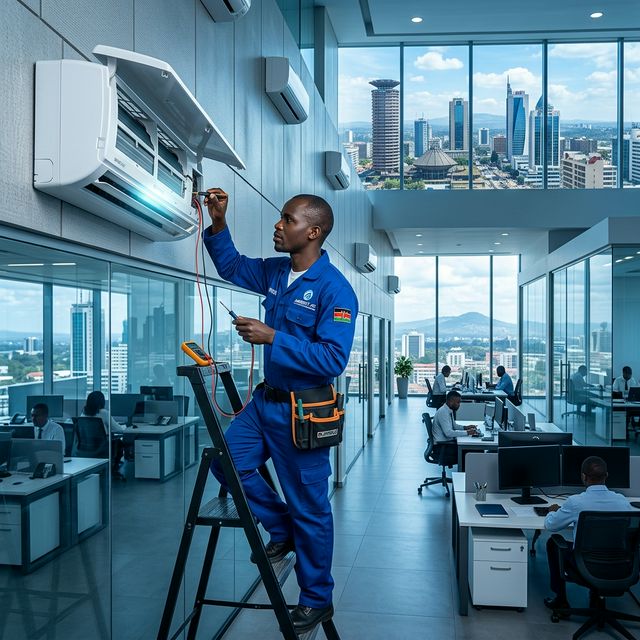
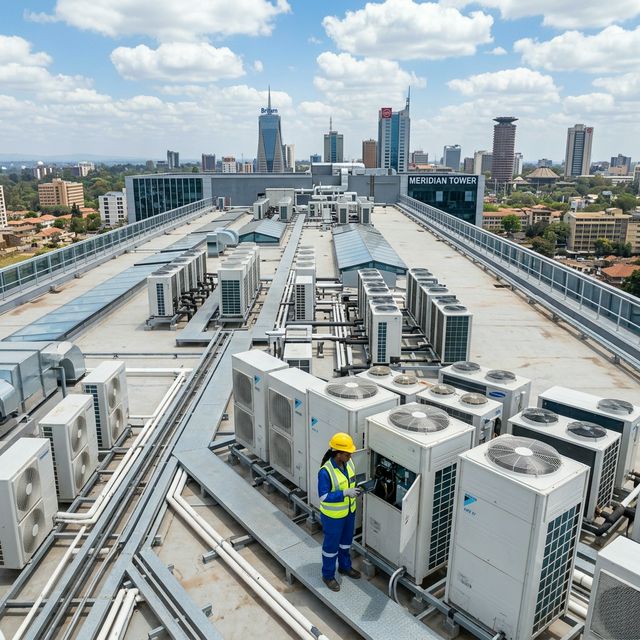
Need cold rooms or commercial refrigeration in Kenya? Get expert design, installation, and 24/7 repair from Spinel Dynamics Group. Free site visit & quotation. By Spinel Dynamics Group | Kenya’s Leading Cold Room Contractors & Refrigeration Engineers
Cold Storage Is the Backbone of Kenya’s Economy
From the flower farms of Naivasha to the fish landing sites of Mombasa, from supermarket chains in Nairobi to pharmaceutical distributors in Industrial Area, cold rooms and commercial refrigeration in Kenya quietly power some of the country’s most valuable industries. Without reliable cold storage, billions of shillings worth of perishable produce, dairy, meat, fish, flowers, vaccines and pharmaceuticals would never reach their destination.
At Spinel Dynamics Group, we have spent over a decade designing, building and maintaining cold rooms and commercial refrigeration systems across Kenya and East Africa. We have built walk-in chillers for butcheries in Eastleigh, blast freezers for fish processors in Kilifi, pharmaceutical cold rooms for distributors in Westlands, and packhouse cooling systems for flower exporters in Limuru and Naivasha.
This complete guide covers everything you need to know about cold rooms and commercial refrigeration in Kenya — types, sizing, pricing, compressors, insulation panels, refrigerants, installation, maintenance and how to choose the right contractor for your project.
What Is a Cold Room?
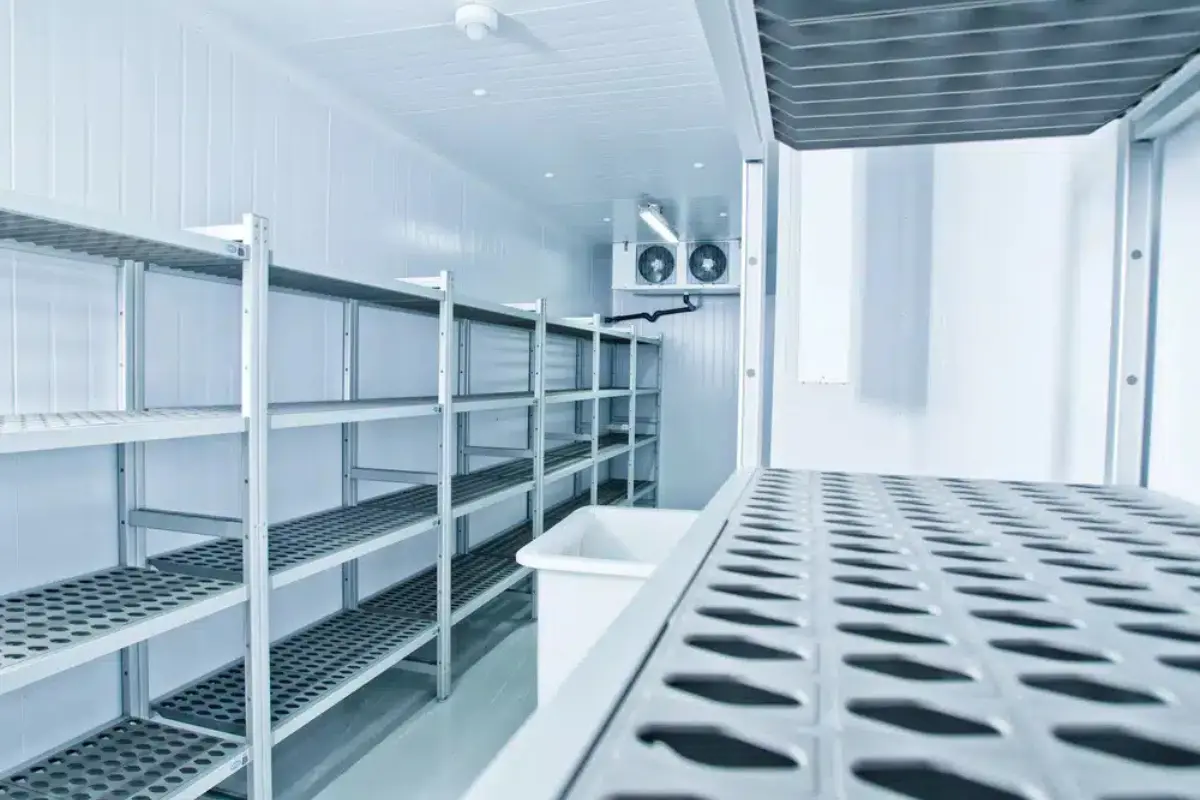
A cold room is an insulated, temperature-controlled enclosure used to store perishable goods at specific low temperatures for extended periods. Cold rooms are typically constructed from prefabricated polyurethane (PU) insulated panels, fitted with a refrigeration unit, and controlled by digital thermostats to maintain precise temperatures.
Unlike domestic refrigerators or commercial display fridges, cold rooms are walk-in spaces that can range from the size of a small storeroom (4 m³) to massive industrial facilities (1,000 m³ or more). They are the workhorses of any business that depends on the cold chain.
Cold Rooms vs Commercial Refrigeration: What’s the Difference?
The terms overlap, but here is how we use them at Spinel Dynamics Group. Cold rooms are walk-in insulated enclosures — chillers, freezers and blast freezers. Commercial refrigeration is a broader category that includes cold rooms plus display cabinets, under-counter fridges, ice machines, beverage coolers, bakery display units, supermarket multi-deck cabinets and process refrigeration equipment.
We design, supply, install and maintain all of these across Kenya.
Types of Cold Rooms Available in Kenya
Different goods need different temperatures. Choosing the right cold room type is the foundation of any successful cold storage project.
1. Chiller Cold Rooms (0°C to +8°C)
Chillers are the most common cold rooms in Kenya. They maintain temperatures just above freezing — typically between 0°C and 8°C — which is ideal for fresh produce, dairy, meat, beverages, flowers and pharmaceuticals that should not freeze.
Restaurants, hotels, supermarkets, butcheries, dairies, hospitals, flower farms and food distributors all rely on chiller cold rooms. A well-designed chiller can extend the shelf life of fresh produce by 3 to 10 times compared to ambient storage.
2. Freezer Cold Rooms (-18°C to -25°C)
Freezer cold rooms hold goods at deep freezing temperatures, typically between -18°C and -25°C. This is the standard storage range for frozen meat, fish, poultry, ice cream, frozen vegetables, processed foods and long-term food reserves.
Freezer rooms require thicker insulation panels (typically 100–150 mm), more powerful refrigeration units, and special floor construction to handle the lower temperatures without ice damage.
3. Blast Freezers (-35°C to -45°C)
Blast freezers are designed to rapidly reduce the core temperature of fresh products from ambient or chilled to deep-frozen in just a few hours. This rapid freezing preserves cellular structure, texture, flavour and nutritional value far better than slow freezing.
Blast freezers are essential for fish processors, meat exporters, ice cream manufacturers, ready-meal producers and food processing plants. They are not used for long-term storage — products are transferred to standard freezer rooms once the core temperature is reached.
4. Pharmaceutical Cold Rooms (+2°C to +8°C)
Pharmaceutical cold rooms maintain a tightly controlled temperature range, typically 2°C to 8°C, with very low temperature variation. They are used for storing vaccines, biologics, insulin, blood products, reagents and other temperature-sensitive medicines.
These cold rooms require WHO and GDP (Good Distribution Practice) compliance, including continuous temperature monitoring, alarm systems, backup refrigeration, validated mapping studies, and detailed documentation. We build pharmaceutical cold rooms for hospitals, KEMSA-approved distributors, clinical research organisations and private pharma companies across Kenya.
5. Flower & Horticultural Cold Rooms (+1°C to +4°C)
Kenya’s flower industry — second-largest in the world by export value — depends on precision cold rooms. Roses, carnations, gypsophila and other cut flowers must be cooled to 1–4°C within hours of harvest to slow respiration and extend vase life.
Flower cold rooms combine specific temperature control with high humidity (85–95% RH), gentle airflow to prevent petal damage, and often include forced-air pre-cooling tunnels. We build cold rooms and packhouses for flower farms in Naivasha, Nakuru, Limuru, Thika, Athi River and Mt Kenya region.
6. Banana & Fruit Ripening Rooms (+14°C to +20°C)
Specialised cold rooms with controlled ethylene gas exposure to ripen bananas, mangoes and avocados uniformly. Used by major fruit distributors and supermarket supply chains in Kenya.
7. Mortuary Cold Rooms (+2°C to +6°C / -10°C)
We also design and install mortuary cold rooms and body storage units for hospitals, funeral homes and county morgues across Kenya. These have specialised body tray systems and meet Ministry of Health requirements.
Cold Room Components: What’s Inside a Quality Cold Room
A professional cold room is more than just an insulated box. Here are the components that determine whether your cold room will perform reliably for 10–20 years or fail within a year.
1. Insulated PU Panels
The walls, ceiling and floor of a cold room are built from prefabricated sandwich panels with a polyurethane (PU) foam core sandwiched between two metal skins (usually pre-painted galvanised steel or food-grade stainless steel).
Panel thickness depends on the target temperature: 60 mm for chillers (above 0°C), 80–100 mm for freezers (-18°C to -25°C), and 120–150 mm for blast freezers and very low-temperature rooms. The thicker the panel, the lower the heat gain and the smaller the refrigeration system you need.
PU foam density should be 40–42 kg/m³ for proper structural strength and insulation performance. Cheaper panels with lower density foam will sag, lose insulation value and develop cold bridges within a few years.
2. Refrigeration Unit (Condensing Unit + Evaporator)
The refrigeration system is the heart of a cold room. It consists of two main parts. The condensing unit sits outside or on the roof and contains the compressor, condenser coil, condenser fan and electrical controls. The evaporator unit (also called an air cooler) hangs inside the cold room and contains the cooling coil, evaporator fans and defrost heaters.
Top-tier brands we install in Kenya include Bitzer (Germany) for premium semi-hermetic and screw compressors, Copeland (Emerson, USA) for scroll and reciprocating compressors, Danfoss (Denmark) for controls and components, Güntner (Germany) for premium evaporators and condensers, Embraco for smaller hermetic compressors, and Tecumseh for cost-effective condensing units.
3. Cold Room Door
The door is often the weakest point in a cold room’s thermal envelope. We install heavy-duty hinged or sliding doors with PU insulation matching the panel thickness, magnetic gaskets that seal tightly, internal safety release handles (so no one can get trapped inside), and door heaters on freezer doors to prevent ice build-up around the frame.
For high-traffic applications like supermarkets, we install rapid-roll PVC strip curtains and air curtains to minimise cold loss when the door is open.
4. Refrigerants
The refrigerant is the working fluid that absorbs heat from inside the cold room and rejects it outside. Modern refrigerants used in Kenya include R404A (still common but being phased down due to high GWP), R134a (medium-temperature applications), R507 (low-temperature applications), R290 / propane (low GWP natural refrigerant, increasingly popular for small systems), and R744 / CO₂ (used in advanced transcritical systems for large supermarkets).
Kenya is a signatory to the Kigali Amendment, which means high-GWP refrigerants are being phased down. We design new systems with future-proof, low-GWP refrigerants wherever possible.
5. Controls & Monitoring
Modern cold rooms use digital controllers (Dixell, Carel, Eliwell are the most common in Kenya) for precise temperature management, automatic defrost cycles, alarm functions, and data logging. For pharmaceutical and high-value applications, we install continuous remote monitoring systems with SMS and email alerts, plus cloud-based temperature logging for regulatory compliance.
6. Floor Construction
Cold room floors are a critical and often overlooked element. For chillers, a standard PU panel floor or screeded concrete floor with insulation underneath is usually sufficient. For freezers and blast freezers, we install proper underfloor insulation plus floor heating cables to prevent frost heave (where moisture freezes underneath the floor slab and lifts the structure).
Cold Room Sizing: Getting It Right
Undersized cold rooms can’t maintain temperature on hot days. Oversized cold rooms waste capital and energy. Correct sizing requires proper engineering — here is what we calculate for every project.
Internal Dimensions
We start with what you need to store: number of pallets, racks, hanging meat, flower tubs, cartons or product types. We then add aisle space, door swing clearance, evaporator clearance, and growth allowance (typically 20–30% extra capacity for future expansion).
Heat Load Calculation
The refrigeration unit must remove all heat gain during operation. We calculate heat load from six sources: heat conducted through walls, ceiling and floor (depends on panel thickness and outdoor temperature); heat from product loaded into the room (depends on product mass, specific heat and temperature drop); heat from air infiltration through the door each time it opens; heat from lights, evaporator fans and other electrical equipment; heat from people working inside the room; and respiration heat from living produce like fresh flowers, fruits and vegetables.
The total heat load determines the refrigeration capacity (measured in kW or HP) you need.
Typical Cold Room Sizes in Kenya
For reference, here are common cold room sizes we build in Kenya and what they typically hold.
| Internal Size | Volume | Suitable For |
|---|---|---|
| 2m × 2m × 2.4m | ~10 m³ | Small café, butchery, clinic |
| 3m × 3m × 2.4m | ~22 m³ | Mid-size restaurant, small farm |
| 4m × 4m × 2.7m | ~43 m³ | Hotel, supermarket |
| 5m × 6m × 3m | ~90 m³ | Large restaurant, food distributor |
| 8m × 10m × 3.5m | ~280 m³ | Supermarket DC, flower farm |
| Custom 200+ m³ | Custom | Food processors, exporters |
Cold Room Prices in Kenya (2026)
Cold room pricing depends on size, temperature range, panel thickness, refrigeration capacity, brand, accessories and installation complexity. Below are realistic 2026 price ranges from Spinel Dynamics Group, in Kenya Shillings (KSh) and excluding VAT.
| Cold Room Type | Typical Application | Indicative Price Range (KSh) |
|---|---|---|
| Small chiller (10 m³, 0–8°C) | Café, clinic, butchery | 450,000 – 800,000 |
| Medium chiller (25 m³, 0–8°C) | Restaurant, dairy | 800,000 – 1,400,000 |
| Large chiller (60 m³, 0–8°C) | Supermarket, hotel | 1,400,000 – 2,800,000 |
| Small freezer (10 m³, -18°C) | Butchery, small fish trader | 700,000 – 1,200,000 |
| Medium freezer (25 m³, -18°C) | Restaurant, ice cream maker | 1,200,000 – 2,200,000 |
| Large freezer (60 m³, -22°C) | Food processor, exporter | 2,200,000 – 4,500,000 |
| Blast freezer (15 m³, -40°C) | Fish/meat processor | 2,500,000 – 5,500,000 |
| Pharmaceutical cold room (20 m³, 2–8°C) | Pharma distributor, hospital | 2,000,000 – 4,000,000 |
| Flower cold room (50 m³, 1–4°C) | Flower farm, packhouse | 1,800,000 – 3,500,000 |
| Mortuary cold room (4–6 bodies) | Hospital, funeral home | 1,500,000 – 3,200,000 |
These prices include design, prefabricated insulated panels, refrigeration unit installation, electrical connections, commissioning and a one-year workmanship warranty. For a precise quote, request a free site visit.
Commercial Refrigeration Equipment We Supply in Kenya
Beyond walk-in cold rooms, Spinel Dynamics Group supplies and installs a full range of commercial refrigeration equipment for the Kenyan market.
Display chillers and freezers for supermarkets, butcheries and convenience stores — including multi-deck open chillers, glass-door upright displays, island freezers, serve-over counters and deli display cabinets.
Under-counter refrigeration for restaurants, bars and cafés — including pizza prep tables, sandwich prep stations, salad bars, back-bar bottle coolers and chef bases.
Beverage and bar refrigeration including back-bar coolers, bottle display fridges, kegerators, ice machines and wine coolers.
Bakery and patisserie refrigeration including dough retarders, pastry display cabinets, chocolate showcases and refrigerated proofing cabinets.
Ice machines in sizes from 30 kg/day for small bars to 500+ kg/day for hotels and food processors, in cube, flake and nugget formats.
Process refrigeration and chillers for ice plants, water chillers, glycol chillers and industrial process cooling applications.
Industries That Depend on Cold Rooms in Kenya
Cold rooms and commercial refrigeration touch almost every sector of Kenya’s modern economy. Here are the key industries we serve.
Restaurants, Hotels and Hospitality
From boutique cafés in Karen to five-star hotels in Diani, every food service business needs reliable chiller and freezer storage. We build kitchen cold rooms that fit seamlessly into hotel back-of-house layouts and integrate with kitchen ventilation systems for a complete project.
Supermarkets and Retail
Naivas, Carrefour, Quickmart, Chandarana, Cleanshelf and independent supermarkets across Kenya rely on a combination of walk-in cold rooms (for stock storage) and display refrigeration (for customer-facing presentation). We design and install both as integrated systems.
Butcheries and Meat Processing
Whether it’s a neighbourhood butchery in Ruaka or a large meat processor like Farmer’s Choice or Choice Meats, controlled cold storage is non-negotiable. We build chillers, freezers, blast freezers and meat hanging rooms with proper rail systems.
Fish, Seafood and Aquaculture
Mombasa, Kilifi, Lamu, Kisumu and Naivasha have thriving fish industries. We design coastal-grade cold rooms (using SS 316 stainless steel and corrosion-resistant components) for fish landing sites, aquaculture farms and seafood exporters.
Dairy
From large dairy processors to small farm-level milk coolers, the dairy industry depends on rapid milk chilling and cold storage. We supply milk bulk tanks, dairy cold rooms and ice bank systems.
Flowers and Horticulture
Kenya’s cut flower export industry centres on Naivasha, Nakuru, Limuru, Thika and Mt Kenya. We build precision cold rooms, pre-cooling tunnels and packhouse cooling for major flower farms, plus cold storage for fresh vegetable exporters supplying the EU market.
Pharmaceuticals and Healthcare
Hospitals, KEMSA-approved distributors, vaccine warehouses, blood banks and pharmacies require validated 2–8°C cold rooms with continuous monitoring and backup systems. We design and install fully compliant pharmaceutical cold chain infrastructure.
Food Processing and Manufacturing
Bakeries, ice cream factories, ready-meal producers, sausage makers and beverage bottlers rely on a mix of process cooling, blast freezing and finished-goods storage. We provide end-to-end design and installation.
Logistics and Cold Chain
Cold storage warehouses, refrigerated transport hubs and export consolidation centres at airports and ports rely on large-scale cold storage facilities, which we build from the ground up.
Funeral Services and Mortuaries
We install body cold storage for hospitals, county morgues and private funeral homes across Kenya.
Refrigerants and Environmental Compliance
Refrigerant choice matters more than ever. Kenya has ratified the Kigali Amendment, which phases down high-GWP hydrofluorocarbon (HFC) refrigerants. The National Environment Management Authority (NEMA) and Kenya Bureau of Standards (KEBS) are progressively enforcing these requirements.
What does this mean for you? New cold rooms should be designed with low-GWP refrigerants where possible. Existing systems on R404A and R22 should have a phase-out plan. Refrigerant handling must be done by certified technicians using recovery equipment — not vented to atmosphere.
At Spinel Dynamics Group, all our refrigeration technicians are certified for proper refrigerant handling. We help clients plan refrigerant transitions, retrofit existing systems where possible, and design new installations for long-term regulatory compliance.
The Installation Process: How We Build Your Cold Room
Our cold room installation process follows a proven four-step approach.
Step 1: Free Site Survey and Consultation
One of our refrigeration engineers visits your site at no cost. We measure available space, assess electrical capacity (cold rooms need dedicated 3-phase power for most commercial sizes), evaluate the location for the outdoor condensing unit, identify floor levels and drainage points, and discuss your products, volumes and operational hours.
Step 2: Engineering Design and Quotation
We produce a complete engineering design including cold room layout drawings, panel and door schedule, refrigeration capacity calculation (heat load), equipment specification with brand and model details, electrical and drainage requirements, and a transparent itemised quotation.
Step 3: Manufacturing and Installation
Once approved, we manufacture or import the panels (depending on size and specification), order the refrigeration equipment from our partner brands, and schedule installation. On site, our team prepares the floor, assembles the insulated panels with our specialised joining system, installs doors with proper sealing, mounts the evaporator unit inside and the condensing unit outside, runs refrigerant copper piping with proper insulation, completes electrical wiring with safety interlocks, and configures the digital controller.
Step 4: Commissioning, Testing and Handover
Before handover, we pressure-test the refrigerant circuit, evacuate moisture, charge with refrigerant, run the system through a complete pull-down cycle, verify temperature stability at the target setpoint, balance airflow, test alarms and safety devices, and train your staff on proper operation, defrost cycles, alarm response and basic troubleshooting. You receive operation manuals, electrical schematics, refrigerant charge records, and our 24/7 emergency support contact.
Maintenance: Protecting Your Cold Room Investment
A cold room represents a major capital investment — often KSh 1 million to 5 million or more. Proper maintenance is the difference between 15+ years of reliable service and an early, expensive failure.
Daily Operator Tasks
Staff should check displayed temperature against the setpoint, listen for unusual compressor or fan noise, ensure doors close properly and gaskets seal, and keep the floor clean and free of spills that could damage panel skins.
Monthly Maintenance
Clean condenser coils (this single task prevents more failures than any other), inspect and clean evaporator coils, check refrigerant sight glass for moisture or bubbles, test the defrost cycle, inspect door gaskets and adjust if needed, and review temperature logs for any concerning trends.
Quarterly Professional Service
We recommend professional servicing every three months for commercial cold rooms. This includes electrical safety testing, refrigerant charge verification, fan motor inspection and lubrication, drain pan cleaning, controller calibration check, and panel and floor inspection for damage or insulation issues.
Annual Major Service
Once a year, we recommend a deeper service: full electrical inspection and tightening, compressor oil sample analysis (for screw and large reciprocating units), refrigerant leak test using electronic detector, full controller and alarm system test, and pressure relief valve inspection.
Emergency Response
When a cold room fails, every hour matters. A freezer failure with KSh 2 million of stock at risk demands a rapid response. Our 24/7 emergency line ensures a technician is dispatched within hours across Nairobi and on the same day across most major Kenyan towns.
Common Cold Room Problems and How We Fix Them
After more than ten years of work across Kenya, here are the issues we see most often and how we resolve them.
Cold room not reaching setpoint temperature. Causes range from refrigerant undercharge (most common), to dirty condenser coil, to failed compressor, to faulty thermostat, to door seal leakage, to overloaded room. We diagnose systematically and fix the actual root cause rather than guessing.
Excessive ice build-up on the evaporator. Usually due to faulty defrost system, damaged door gasket allowing humid air in, or undersized refrigeration unit running constantly. We troubleshoot and resolve.
Compressor short-cycling (turning on and off rapidly). Could be undersized refrigerant charge, faulty pressure switch, oversized compressor, or controller misconfiguration. Short-cycling drastically shortens compressor life — needs urgent attention.
Water leaking from the cold room. Usually a blocked condensate drain or failed drain heater. Simple fix but needs prompt attention to prevent panel damage.
Excessive electricity consumption. Often caused by dirty coils, refrigerant leak, faulty insulation, oversized refrigeration system, or operational errors like leaving doors open. We perform an energy audit and recommend corrections.
Panel damage and cold bridging. Forklift impacts, water ingress through damaged skins, or poor original installation. We can repair locally damaged panels or replace sections as needed.
Sudden total failure. Most often a tripped breaker, blown contactor, failed pressure switch, or compressor seizure. Our emergency team gets you running again — often within hours.
Why Choose Spinel Dynamics Group for Cold Rooms in Kenya
Many companies in Kenya can sell you a cold room. Few can engineer one properly and stand behind it for 15 years. Here is what makes us different.
We have over a decade of dedicated cold room and commercial refrigeration experience across Kenya and East Africa. Every project is properly engineered — heat load calculation, equipment selection, refrigerant choice and electrical design done by qualified refrigeration engineers, not estimated from rules of thumb. We work with proven international brands — Bitzer, Copeland, Danfoss, Güntner, Embraco — with full warranty backing and access to genuine spare parts. Our installation teams are factory-trained and certified for refrigerant handling. We provide 24/7 emergency repair across Nairobi and rapid response across major Kenyan towns. Our pricing is transparent, itemised, and free of surprise charges. And every installation includes commissioning, training and a full one-year workmanship warranty.
Over 200 clients across Kenya — including major restaurants, supermarket chains, flower farms, pharmaceutical distributors, food processors and hotels — trust us with their cold storage infrastructure.
Frequently Asked Questions (FAQ)
How much does a cold room cost in Kenya?
Prices range from around KSh 450,000 for a small 10 m³ chiller suitable for a café or clinic, to KSh 5 million or more for industrial-scale freezers and blast freezers. A typical mid-size restaurant chiller costs KSh 800,000 to 1.4 million, while a supermarket-grade chiller runs KSh 1.4 to 2.8 million. Pharmaceutical and blast freezer applications cost more due to specialised equipment and validation requirements.
How long does it take to install a cold room?
A small standard cold room (10–25 m³) typically takes 7 to 14 days from order to commissioning. A medium commercial cold room takes 2 to 4 weeks. Large custom projects with multiple rooms, special floor preparation, or pharmaceutical validation can take 6 to 12 weeks.
What temperature should my cold room be set at?
Common setpoints: chillers for fresh produce, dairy and meat at 2–4°C, beverage and short-term storage at 4–8°C, freezers for long-term frozen storage at -18 to -22°C, blast freezers for rapid freezing at -35 to -40°C, pharmaceutical storage at 2–8°C, and flower cold rooms at 1–4°C with high humidity. We help you choose the right setpoint for your specific products.
Do you provide cold rooms outside Nairobi?
Yes. We install cold rooms across Kenya — Mombasa, Kisumu, Nakuru, Eldoret, Naivasha, Nyeri, Thika, Machakos, Malindi, Diani, Kilifi, Nanyuki, Meru, Kakamega, Kisii — and parts of East Africa including Uganda, Tanzania and Rwanda.
Can you repair cold rooms from other contractors?
Yes. We service and repair cold rooms regardless of who originally installed them. We can also retrofit, upgrade or expand existing installations.
Do you offer maintenance contracts?
Yes. We offer monthly, quarterly and annual maintenance contracts. Contract clients receive priority emergency response, discounted spare parts and scheduled preventive maintenance to extend equipment life and prevent unexpected failures.
Can you build cold rooms with backup power and monitoring?
Absolutely. For critical applications like pharmaceutical, blood bank, fish processing and high-value horticulture, we design systems with automatic generator transfer switches, dual refrigeration circuits (so one can fail without losing the room), continuous remote temperature monitoring with SMS and email alerts, and cloud-based data logging for compliance.
What refrigerants do you use?
We design new systems with low-GWP refrigerants in line with Kenya’s Kigali Amendment commitments. Common refrigerants include R134a, R404A (being phased down), R507, R290 (propane) and R744 (CO₂) for advanced systems. We help clients plan transitions away from R22 and high-GWP HFCs.
Do you supply refrigeration spare parts?
Yes. We stock common spare parts (controllers, fans, contactors, pressure switches, gaskets, thermostats) and have direct supply relationships with Bitzer, Copeland, Danfoss and other manufacturers for compressors and major components.
Can I see references and past projects?
Yes — we are happy to share references and arrange site visits to existing installations, subject to client permission. Call us on +254 714 821 020 to discuss your project.
Get a Free Site Visit and Quotation Today
Whether you’re building a new restaurant in Kilimani, expanding a supermarket chain across counties, setting up a flower packhouse in Naivasha, distributing vaccines from Industrial Area, or processing fish in Kilifi — Spinel Dynamics Group is Kenya’s trusted partner for cold rooms and commercial refrigeration.
We design it right. We build it to last. And we’re there 24/7 when you need us.
Call us today: +254 714 821 020 Email: info@spineldynamics.com Visit us: Aqua Plaza, First Floor, Murang’a Road, Nairobi Hours: Mon–Fri 8:00 AM – 6:00 PM | Sat 9:00 AM – 2:00 PM
Don’t risk your inventory, your customers or your reputation on amateur cold storage. Talk to the experts — talk to Spinel Dynamics Group.