Customized cold room installation in Kenya: complete guide by Spinel Dynamics Group
Customized cold room installation in Kenya | Spinel Dynamics Need customized cold room installation in Kenya? Spinel Dynamics designs, builds and services cold rooms in Nairobi, Mombasa, Kisumu and East Africa.
If you run a supermarket, butchery, hospital, hotel, flower farm, or food-processing plant, reliable cold room installation in Kenya is not a luxury. Instead, it is the backbone of your business. Moreover, a poorly built cold room can spoil stock worth millions, damage your reputation, and create serious health risks. On the other hand, a well-built one protects margins, extends shelf life, and keeps you compliant with Kenyan food-safety standards.
This is where Spinel Dynamics Group comes in. Notably, as a leading HVAC and refrigeration company in Kenya, Spinel Dynamics specialises in fully customized cold room installation across Nairobi, Mombasa, Kisumu, and the wider East African region. Furthermore, the team engineers every project around your products, your volumes, and your site, rather than building from a one-size-fits-all template.
In this guide, you will learn how cold room installation in Kenya actually works, what factors affect performance and price, which components matter most, and why a customized approach beats off-the-shelf solutions every time.
Why customized cold room installation in Kenya matters
Most failed cold rooms in Kenya share the same root cause. Specifically, someone sized them incorrectly, insulated them poorly, or fitted refrigeration units that do not match the load. As a result, compressors run non-stop, energy bills spiral, and temperatures drift outside safe ranges.
Fortunately, customized cold room installation in Kenya solves these problems from day one. Here is why it matters.
Every product has a different temperature profile
Fresh meat, dairy, vaccines, fish, flowers, fruits, and frozen goods all behave differently. For example, vaccines demand a tight 2 to 8 degrees Celsius range with no excursions, while flower exporters need around 2 to 4 degrees with high humidity. Therefore, generic cold rooms cannot serve all of these products well.
Kenyan climates vary widely
Mombasa is hot and humid. Meanwhile, Naivasha is cool and dry, and Nairobi sits in between. Consequently, a cold room built for the coast needs corrosion-resistant condensers and stronger dehumidification, while one in the Rift Valley may prioritise different insulation and door sealing. In short, customization accounts for these realities.
Site conditions are never identical
Ceiling heights, floor loads, drainage, three-phase power availability, and access for delivery trucks all influence design. For this reason, Spinel Dynamics surveys every site before quoting, which prevents costly surprises later.
Our cold room installation process in Kenya
Spinel Dynamics follows a structured process for every cold room installation in Kenya. Here is exactly what you can expect when you engage the team.
Step 1: Free consultation and site survey
First, a senior engineer visits your site to understand your product, daily volumes, target temperature, operating hours, and growth plans. During the visit, the engineer takes measurements, captures photos, and notes constraints.
Step 2: Heat load calculation and design
Next, the team performs a proper heat-load calculation. This factors in product mass, entry temperature, insulation thickness, ambient conditions, door openings, lighting, and personnel. As a result, you get a refrigeration capacity that is neither oversized nor undersized.
Step 3: Detailed quotation
After that, you receive a clear, itemised quote that covers panels, doors, refrigeration units, electricals, controls, and installation labour. Importantly, there are no hidden line items.
Step 4: Manufacturing and procurement
Once you approve the quote, the workshop prepares PUF insulated panels to your exact dimensions. In addition, the team sources refrigeration units from authorised brand partners, including Daikin, Carrier, Samsung, LG, Toshiba, Midea, and Panasonic, depending on the application.
Step 5: On-site installation
Then, the team installs the cold room on your site, typically within a few days for standard sizes. This stage includes panel assembly, door fitting, refrigeration mounting, electrical wiring, and pipework.
Step 6: Commissioning and handover
Before handover, the team tests the cold room under load. Specifically, technicians verify temperatures, confirm alarms, and train your staff on basic operation and hygiene. Finally, you receive documentation, including warranty certificates and maintenance schedules.
Step 7: Aftercare and maintenance
Lastly, Spinel Dynamics offers Annual Maintenance Contracts that cover servicing, emergency response, and genuine spare parts. As a result, your investment stays protected for years.
Key components of a quality cold room installation
A reliable cold room installation in Kenya depends on getting every component right. Unfortunately, cutting corners on any single one shortens the lifespan of the whole system.
Insulated PUF panels
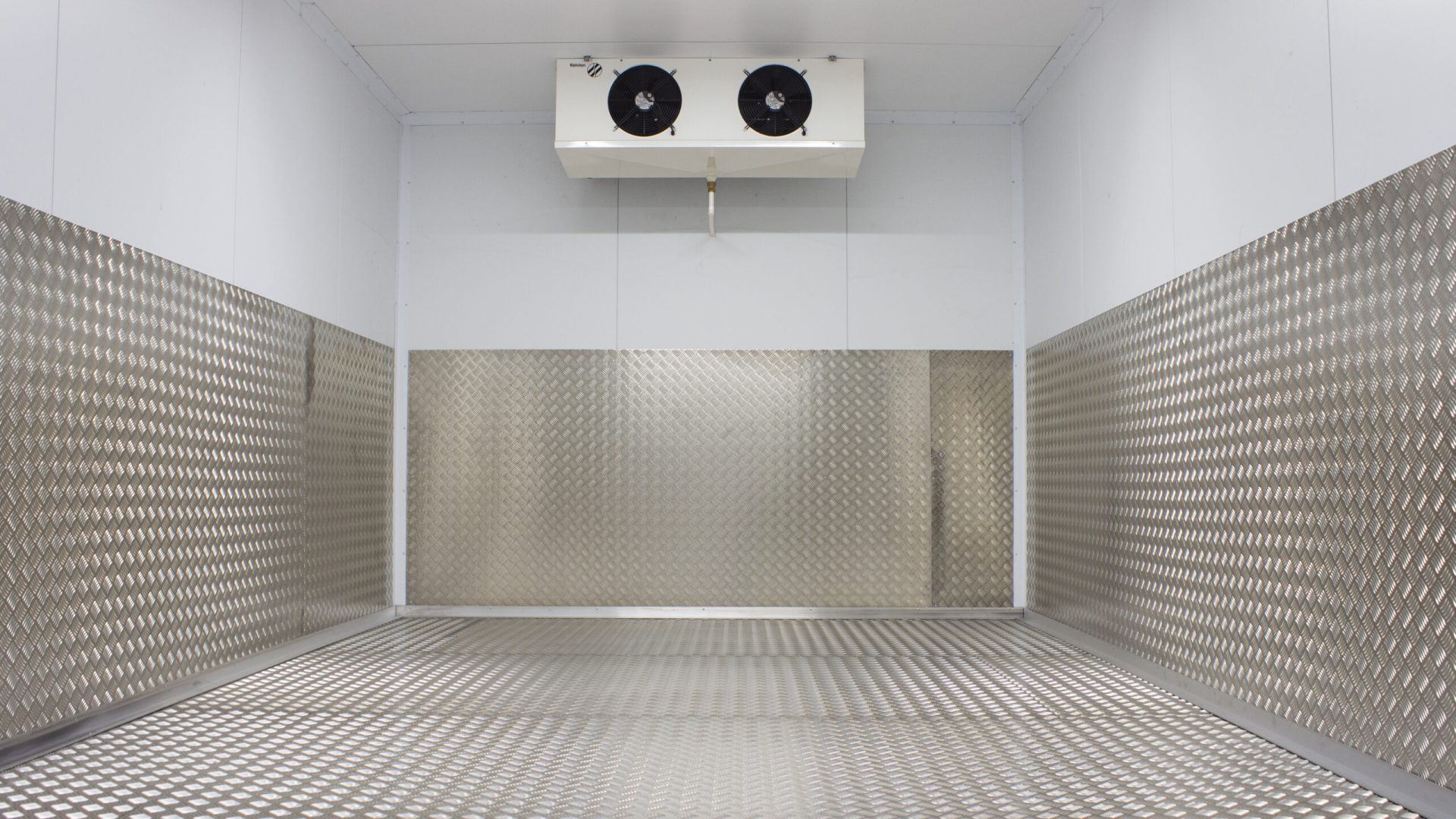
Polyurethane Foam (PUF) panels form the walls, ceiling, and sometimes the floor. Typically, panel thickness ranges from 75 mm for chillers up to 150 mm for deep freezers. Notably, Spinel Dynamics uses high-density panels with food-grade pre-coated steel finishes that resist corrosion and clean easily.
Cold room doors
Doors are a critical weak point. For instance, a cheap door breaks seals, drips condensation, and lets warm air rush in. Therefore, the team supplies hinged doors for small rooms, sliding doors for forklifts, and strip curtains for high-traffic openings. Furthermore, every door includes safety release handles so no one can be trapped inside.
Refrigeration units
The refrigeration system is the heart of the cold room. Accordingly, Spinel Dynamics specifies condensing units, evaporators, and expansion valves matched to the calculated load. Where possible, the team chooses inverter-driven systems because they save energy and run more quietly.
Temperature controls and alarms
Modern cold rooms use digital controllers that display real-time temperatures and trigger alarms if values drift. Additionally, the team can add data loggers and remote monitoring for pharmaceutical and high-value applications, so you receive alerts on your phone.
Lighting and electrical
Cold-room-rated LED lighting reduces heat input and lasts longer than standard bulbs. Equally important, the team carries out all electrical work in accordance with Kenyan wiring regulations.
Floor construction
For walk-in cold rooms with frequent traffic, the team recommends an insulated floor with anti-slip finish. However, drive-in cold rooms used with pallet trucks need reinforced flooring.
Types of cold rooms we install across Kenya
Different industries need different cold room configurations. Fortunately, Spinel Dynamics handles the full range.
Walk-in chillers (0 to 8 degrees Celsius)
These chillers suit fresh meat, dairy, beverages, fruits, and vegetables. In fact, they are the most common cold rooms in Kenyan supermarkets, restaurants, and butcheries.
Walk-in freezers (minus 18 to minus 25 degrees Celsius)
Businesses use walk-in freezers for frozen meat, fish, ice cream, and ready meals. Notably, they require thicker insulation and more powerful refrigeration than chillers.
Blast freezers (down to minus 35 degrees Celsius)
Engineers design blast freezers to drop product temperature very quickly. Generally, fish processing, meat processing, and ready-meal production rely on them.
Pharmaceutical cold rooms (2 to 8 degrees Celsius)
The team builds these rooms to strict standards for vaccine and medicine storage. Additionally, they include validation, mapping, and continuous monitoring.
Floriculture cold rooms
Engineers design floriculture cold rooms to maintain low temperatures with controlled humidity. As a result, they protect cut flowers from harvest until they reach the airport.
Modular and mobile cold rooms
These pre-fabricated cold rooms can be assembled, dismantled, and relocated. Therefore, they suit project sites, events, and growing businesses that may need to expand.
Cold room installation costs in Kenya: what to expect
Clients always want to know what cold room installation in Kenya costs. Honestly, the answer depends on several factors. Specifically, the main cost drivers include internal volume measured in cubic metres, target temperature (with freezers costing more than chillers), panel thickness and finish, door type and quantity, refrigeration brand and capacity, floor construction, controls, monitoring, backup power requirements, and site complexity and location.
For example, a small butchery cold room costs a fraction of an industrial blast freezer. Therefore, rather than guess, request a free site survey from Spinel Dynamics. In return, you will receive a transparent quote that itemises every cost so you can plan your budget accurately.
Why choose Spinel Dynamics for cold room installation in Kenya
Many vendors sell cold rooms in Kenya. However, few deliver true engineering, genuine equipment, and lasting support. Here is what sets Spinel Dynamics apart.
Authorised brand partnerships
The company is an authorised dealer for Daikin, Carrier, Samsung, LG, Toshiba, Midea, and Panasonic. As a result, you get genuine equipment, factory warranties, and access to authentic spare parts.
In-house engineering
The team produces heat-load calculations, equipment schedules, and detailed drawings for every project. In other words, clients receive professional documentation, not back-of-envelope estimates.
End-to-end service
From design through installation to maintenance, one team handles everything. Therefore, no one points fingers between contractors when something needs attention.
Frequently asked questions
How long does cold room installation in Kenya take?
Generally, the team installs a standard small cold room within three to seven days from delivery. However, larger or more complex projects, such as blast freezers or multi-room facilities, take longer. In every case, timelines are confirmed at the quotation stage.
Can you install a cold room in an existing building?
Yes. In fact, most cold rooms are modular and built inside existing warehouses, kitchens, or shops. During the site survey, the team will assess access, ceiling height, drainage, and power supply.
What temperature can your cold rooms achieve?
Spinel Dynamics installs chillers from 2 to 8 degrees Celsius, freezers down to minus 25 degrees Celsius, and blast freezers down to minus 35 degrees Celsius. Ultimately, the choice depends on your product needs.
Do your cold rooms come with a warranty?
Yes. Specifically, panels and refrigeration equipment carry manufacturer warranties. Additionally, the team offers extended Annual Maintenance Contracts for added peace of mind.
Get a free quote for cold room installation in Kenya
Whether you need a compact butchery chiller or a large industrial freezer, Spinel Dynamics Group has the engineering depth, authorised brands, and aftercare to deliver. Therefore, reach out today for a free consultation and site survey.
Contact Spinel Dynamics Group
Office: Aqua Plaza, First Floor, Murang’a Road, Nairobi
Phone: +254 714 821 020
Email: info@spineldynamics.com
Hours: Mon–Fri 8:00 AM – 6:00 PM, Sat 9:00 AM – 2:00 PM
In conclusion, stop settling for generic refrigeration. Instead, choose engineered, customized cold room installation in Kenya. Above all, choose Spinel Dynamics Group.